Author: admin

  • Professions That Make You A Perfect Fit for CASA

    Professions That Make You A Perfect Fit for CASA

    Those who are (or once were) teachers, day care workers, homemakers, social workers and more may make an easy transition to being a Court Appointed Special Advocate (CASA).

    Right now, Maricopa County is home to more than 9,000 children in foster care and many of them could benefit tremendously from having a helpful figure guide them through this difficult period in their young lives.

    CASA of Maricopa County provides advocates for children who ensure that each child experiencing foster care is treated with dignity and respect and are provided with the care they deserve. These advocates are volunteers — everyday members of the community lifting their voices to protect the rights of vulnerable children who may have endured abuse or neglect.

    Some of the likeliest candidates to fit the profile of a Court Appointed Special Advocate (CASA) volunteer share current or past vocational experiences that have prepared them to lend compassionate services to youth living in foster care. Here are some of the common occupations and preoccupations that prepare many of these volunteers for the experiences they may encounter as a CASA.

    Teachers and School Staff: Those who have worked at all levels of public and private education are well-suited to take on volunteer work with children in the court system — especially for those having extended breaks during the summer and winter. Using that time to take on a unique assignment will go far toward helping a child in foster care navigate the intricacies of their parents’ legal case. This is an invaluable way to give back to some of the most vulnerable members of the community. What’s more, teachers and school staff have experience in navigating the school system for children who are in the Individualized Education Program (IEP) or have a 504 plan.

    Early Childhood Caregivers: In a similar way, early childhood caregivers are ideal candidates to provide the nurturing assistance and basic childcare to youth of all ages in the care of the court system. People who spend their days working in daycare facilities or preschools understand the complex physical, social and emotional developments taking place at critical young ages. When children of preschool age enter foster care, the attention and nurturing they receive can have a lasting impact and can significantly shape their ability to cope with the challenges ahead.

    Early childhood caregivers are also trained to be very observant of behaviors in pre-verbal children that help them read and react appropriately to each foster child’s needs. They can communicate those needs directly to a judge to ensure the child’s best interests are kept at the forefront of the proceedings.

    Social Workers and Medical Professionals: Social workers, physicians and nursing professionals possess some of the ideal skill sets for being effective CASA volunteers. By virtue of their intensive training in clinical practices, both social workers and medical professionals are excellent observers of child welfare and will understand how to properly communicate their observations to the court for consideration throughout the proceedings.

    In the day-to-day of their professional lives, social workers and physicians may have frequent interactions with courts of law as advocates or expert witnesses, making them familiar with the court environment that can be very overwhelming for a child who lacks an adult advocate.

    Homemakers and Empty-Nesters: You do not have to be employed in an official role to be a perfect CASA candidate. Stay-at-home spouses and empty-nesters looking to fill their free time with a meaningful activity that gives back to their community will find volunteering with CASA of Maricopa County immensely rewarding. A large percentage of CASA volunteers are at or above retirement age and benefit from the experience of a lifetime spent raising children of their own.

    If you think your past experiences have prepared you to become an advocate, see what it takes to be a CASA.

    How to Become a Volunteer

    There are no special requirements or skills needed to begin your journey to becoming a CASA volunteer. In fact, it is beneficial to the children served by CASA that volunteers represent all areas of society, coming from different cultures, professions, ethnic and socio-economic backgrounds.

    Simple requirements include:

    • Volunteers are at least 21 years old
    • Volunteers can complete a background check and provide references
    • Volunteers will participate in at least 30 hours of pre-service training
    • Volunteers are available to attend court appearances
    • Volunteers are willing to stay involved with your child’s case until it is closed

    Get started on your CASA journey today by starting with What Is A CASA?

     

  • 10 Ways Being a CASA Volunteer Helps Your Community

    10 Ways Being a CASA Volunteer Helps Your Community

    As a CASA, you’re giving back to your community in a way that goes beyond the holiday volunteer gigs — you’re giving a child a brighter future.

    Today, many feel driven to give back to their community. Those who feel they’ve received good fortune in their own lives, have made the important choice to use their influence and intellect to try to assist in challenging issues and build a foundation for those less fortunate. The problem lies in making the choice between all of the incredible volunteer and community outreach opportunities available in Maricopa County’s thriving nonprofit spaces.

    If this sounds like a familiar scenario and you are looking for a way to give back and support your community, becoming a Court Appointed Special Advocate (CASA) volunteer is one of the surest ways to make a lasting impact.

    Here are just 10 ways making a commitment to the foster population served by CASA of Maricopa County can create a positive and enduring mark on your community. As a CASA, you can:

    • Ensure abused and neglected children have a voice
    • Provide emotional support for children going through a period of uncertainty in their lives
    • Provide stability to children in school, allowing them to focus on their studies
    • Assist teenagers and older youths in being aware of their options after foster care
    • Children who have regular access to their CASA advocate are half as likely to reenter foster care
    • The presence of a CASA volunteer can decrease the amount of time a child is in foster care
    • Provide kids in foster care with a consistent adult role model
    • Enable greater access to valuable services
    • Children in foster care without proper guidance have an increased likelihood of going down the wrong path
    • CASA volunteers can help ensure that children under their care are moved less frequently from one foster family to another

    Federal, state, and local officials whose responsibility it is to process children through the court and foster systems have come to rely heavily on CASA programs to improve outcomes and prevent delinquency. For instance:

    • The United States Department of Health and Human Services (HHS) give their highest recommendation to CASA programs
    • The Office of Juvenile Justice and Delinquency Prevention categorizes CASA as an important safety net for abused and neglected children
    • The National Bar Association fully endorses the use of child advocates to prevent bureaucratic backlogs in cases involving children
    • The Council of Family Court Judges has highlighted the work of CASA programs in keeping children moving properly through the foster system and ensuring long-term homes in safe environments for abused children
    • The United States Department of Justice (DoJ) also found in their case studies of CASA interactions with foster children that court cases involving CASA volunteers are more often resolved than those without

    By upending the status quo and providing foster kids with a path to a more positive outcome, CASA volunteers provide immeasurable impact to the community around them.

    For those considering giving back to their community by becoming a foster parent, but don’t necessarily have the ability, consider becoming a CASA.

    Become a CASA Volunteer

    To become a CASA volunteer, contact your local CASA program to begin the application process. As soon as you have completed the minimum required hours of training, an Order of Appointment (OA) will be drafted to officially assign you to a case. Begin your CASA journey today by visiting What Is A CASA?


  • Thinking About Becoming A Foster Parent? Join CASA

    Thinking About Becoming A Foster Parent? Join CASA

    For those considering becoming a foster parent — but don’t necessarily have the space or ability to bring a child into their home — becoming a CASA may be the perfect solution.

    With more than 9,000 children in the foster care system in Maricopa County, there are no shortage of reasons why many could consider becoming a foster parent. But not everyone who wants to help a foster child has both the means and the space to take one or more young people into their home. CASA of Maricopa County provides a volunteer opportunity for those who are passionate about helping transform the lives of our state’s most vulnerable children.

    Here are three of the main reasons why becoming a Court Appointed Special Advocate with CASA of Maricopa County could be a good fit for you.

    You learn how to become a child’s advocate.
    As a CASA volunteer, one of the main functions is to act as an advocate for a child in foster care, making sure his or her physical and emotional wellbeing are taken care of as his or her court proceedings progress. CASAs are the “glue” that holds each piece of a child’s complex life together, managing relationships and connecting them to services that can help make his or her time away from his or her family as simple to endure as possible.

    You learn how to observe and gather critical information.
    In this committed volunteer role, CASAs will gain vital insight into the life and day-to-day wellbeing of a child in foster care. Making sure that all of his or her needs are accounted for and that documents and records are accurately handled, volunteers act as an observer of his or her life, which is vital to ensuring he or she receives the care he or she deserves. Any concerns that arise about the child’s physical and mental health, as well as his or her education, can be addressed in the most comprehensive way possible with the aid of a CASA volunteer.

    You learn how to work within the court and foster care system.
    Part of the job of each CASA volunteer is to report on any and all findings during the information gathering process, provide testimony on the child’s behalf when necessary and keep the court informed about any developments between agencies and family members. Because of the close relationships that develop between the children and their CASA representatives, CASA volunteers are often in the unique position to provide comfort and real emotional support during what is often a tumultuous, confusing and potentially traumatic time in a child’s life.

    Learn More About Becoming CASA

    Those even considered becoming a foster parent are probably ready to join the legion of CASA volunteers hoping to serve the more than 9,000 youth in need throughout Maricopa County. To become a CASA volunteer, fill out an online volunteer application and you will be contacted to set up an in-person interview. Following the online application, you will be set up for an interview and background check, and complete 30 hours of pre-service training.

    Once you have finished training, you’re eligible to be matched with a foster child and an Order of Appointment will be drafted to officially assign you to a case.

    It’s time to begin your CASA journey! For more information, visit our Advocate Information Center.

  • VOICES Guest Interviews with Marty Manning, Valley Radio Legend

    VOICES Guest Interviews with Marty Manning, Valley Radio Legend

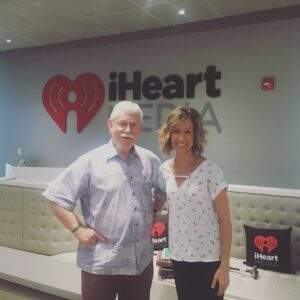
    Voices for CASA  Children was invited by Valley radio legend Marty Manning to discuss the CASA program and about how people can get involved.  Listen to the interview on iHeartRadio’s Valley Views with Marty Manning to hear VOICES Marketing Manager Christine Slomski talk about the importance of this role and the impact it plays in the lives of foster youth.

  • The Great CASA Telethon of 2018

    The Great CASA Telethon of 2018

    Contributed by Valerie Neumann, CASA Volunteer

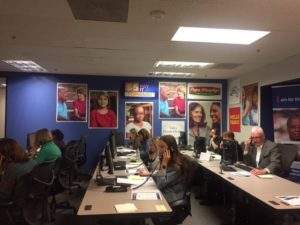
    2018 started off with a “BANG!” for the CASA Program throughout Arizona. January was host to the CASA of Arizona Telethon—a statewide recruitment effort on January 23rd that caught the attention of thousands of viewers throughout the day and evening on AZFamily. CASA volunteers were quick to answer phones to speak to Arizona residents calling in from nearly every county throughout the state!  Two CASA volunteers share about the fun and frenzied experience in the Channel 5 Media Room!

    “I have had many people approach me in the last week who saw me on TV and want to know more. So the telethon is still paying dividends.  People from my gym and people I used to work with!! My gym friends and/or acquaintance wanted to know how I heard about CASA and why did I chose CASA.  I told them I had a former colleague who was a CASA, I had a former colleague who was a foster parent who eventually adopted his foster son and in former life (I was in federal law enforcement), I saw how having an advocate, a voice, a chance could make the difference.  I spent 26 years as a public servant and I wanted and needed to continue that service in my retired volunteer life.” ~ Suzanne Solomon

    “Out of the many phone calls, one really stood out for me. A woman called in and said she was interested in becoming a CASA.  She said she would include her husband in one of our information events as she thought he would consider being one too. The caller said they were both retired and more flexible in their time. She said she was ‘personally moved by the telethon because when she was five, she was a foster child and was adopted’.  Telling me, she sounded like she was choking on tears.  “Wow, what personal life experience she would bring as a CASA.” ~ Carolyn Blaney-Arndt

  • VOICES Volunteer Spotlight: Samantha Trapp

    VOICES Volunteer Spotlight: Samantha Trapp

    Contributed by Valerie Neumann, CASA Volunteer

    Samantha Trapp is a long time VOICES volunteer and supporter of the most vulnerable children in her community. Samantha started working with VOICES several years ago alongside her mom, Chris Trapp, who is a CASA volunteer and a member of the Voices for CASA Children Board of Directors. Since then, working on the annual Superhero event has become a family affair! In 2018,  Samantha is heading up the games for the Superhero Family Fun Run and Festival on April 15th in Kiwanis Park. Outside of the Superhero event, Samantha has assisted with other VOICES events including the 2017 Ruby Kicks Fundraiser, and played a key role with securing a substantial toy donation for the 2017 Jingle & Mingle Soiree (a signature CASA appreciation evening). When asked what motivates her to continue working on these events, Samantha replied “I love seeing all the kids’ faces. It’s always heartwarming seeing kids being kids.”  Those who work with Samantha describe her by saying “You can always count on Samantha. She does what she says she will and is very well organized. She really has a passion for serving children.” Outside of her work with VOICES, Samantha most enjoys spending time with her family.

  • VOICES Opens Training Center

    VOICES Opens Training Center

    Contributed by Valerie Neumann, CASA Volunteer

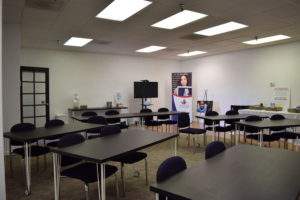
    In the weeks following the start of 2018, volunteers and staff members were hard at work to open the new VOICES Training Center. An extension of the VOICES administrative offices in Old Town Scottsdale, the Training Center is home to CASA trainings, recruitment events, volunteer orientations, and everything in between! Meet Rosie Ronnow, Training and Program Coordinator at VOICES. Rosie provides a tour of the Training Center along with what’s coming up on the calendar for 2018.

    I am thrilled to introduce our new Training Center; not only to our VOICES family, but also to the broader Court Appointed Special Advocate Community.

    This community of CASA Volunteers is filled with knowledge, passion, and heart. Our vision for this training space is to support and empower CASA volunteers, and we hope that this space will allow CASA volunteers to connect with each other, and to resources in the community. The saying, “Knowledge is power” is age-old, yet it holds true for every individual who advocates for a child in state care. New research

    and information is constantly emerging, providing new information about how we can best serve and support the children we are working with. With the VOICES Training Center, our goal is to provide trainings that are relevant, current, useful and interesting to CASA volunteers, equipping them with knowledge that will allow them to be the best advocates possible for the best interest of their CASA children.

  • Good Enough?

    Good Enough?

    Contributed by Valerie Neumann, CASA Volunteer

    As we all know, being a CASA is an endless rollercoaster: some days are very rewarding and others are frustrating.  Sometimes we let “perfect” hinder us and make us feel worthless.  Let me explain.  Our CASA kids have been removed from their homes for a reason – they did not live a perfect life.  Their parents or caregivers were not perfect, their homes, apartments or the streets were not perfect, the situations that adults put them in or let them see were not perfect.   My struggle is that I want perfect for them!   I want them to be in a loving home with two parents, plenty of food, access to medical care, a working vehicle, books to read, someone who checks their homework, takes them to the park, teaches them manners, and tucks them in at night.  This was how I raised my children; this is a no-brainer, right?   But, this is not the case for the majority of the kids who are in foster care.  It is difficult to comprehend that the very people who are supposed to be taking care and protecting our foster children do not have the same expectations.  I worry that these children will not learn how to be responsible adults, how to be in a long-term relationship, how to raise a family or to obey the law.   I want the chain to be broken.

    I was fortunate to be selected to attend the National CASA/GAL Annual Conference this month in Boston.  Although we had to leave the conference early due to inclement weather, it was very inspirational to be around so many others who want to make a difference in the lives of foster children.  The conference offered numerous workshops and based on your interests, you could attend as many as the day offered.  The workshop that resonated with me the most was “Interviewing with the Brain’s Stress System in Mind”, which discussed how stress can actually change a child’s brain and behavior.  The speaker gave an example of when a child gets hurt on the playground and their parent comforts them and tells them they will be okay.  The brain remembers these non-stressful moments and in the face of future stresses, the child is able to calm him/herself.  The good news is that as CASA volunteers we can help re-wire the brain by simply letting a child know that you look forward to seeing them again, how you will be thinking about them often until your next visit, how clever they are, how pretty they are or how proud you are of them.  These positive interactions help teach the child’s brain to come back to these nice calming thoughts when they encounter a stressful situation.  What an easy way to help a child relieve stress without them knowing it!

    The most impactful moment of the conference for me was the presentation of a scholarship to a young lady who had been in foster care since she was five years old.  She lived in an abusive foster home until she turned 18 where these people belittled her, threatened to send her “back”, had their biological children make fun of her, and who never loved or believed in her.   This young lady left home at 18 years old and to this day has never had any more contact with her foster family, nor plans to anytime in the future.  She graduated high school and wants to attend college.  This young lady had a CASA.  This young lady said without her CASA she would not be where she is today.  Was her foster home perfect?  No, but she did have someone who was there for her, who would listen, and made her feel special.

    After hearing her story, I am coming to terms with the fact I can’t make everything perfect for my CASA kids, but they know I care for them, I am proud of them, and I believe in them.   This just might be their “perfect”.

  • CASA Volunteer Shares Insights from National CASA ’18

    CASA Volunteer Shares Insights from National CASA ’18

    Contributed by Roger Lurie, Volunteer

    Two of my most memorable experiences in recent years have taken place in Boston. In 2006, I had the privilege of running the Boston Marathon, a 26.2 mile run through this fascinating and historical city; then, this year, I returned to participate

    in the 2018 National CASA Conference. As with running a marathon, being a dedicated CASA means that we are focused and committed. We have drive and determination and will keep going when we hit the wall. Unlike running a marathon though, being a CASA also means we are attentive to children that are far less fortunate and need us to provide continuity and stable, long-lasting relationships.

    The theme for this year’s National CASA Conference was “Working Together for Their Best Interest.” In my professional career, I participated in many conferences, but found this to be the most rewarding. 1,200 volunteers and dedicated professionals gathered together in one place with a common purpose and commitment to serve children that have suffered and have come from broken homes. There was no pretentiousness or competition; instead, I met folks from all over the United States that share a similar bond in their caring and tenacity to work for improved conditions and support for the 433,000 children in the United States that are in dependent care. Understanding the behavior of our youth, finding new and creative ways to support them, and building on the success of our national CASA movement were themes of almost every session I attended.

    There were too many excellent presentations to highlight all of them; two in particular stand out in my mind:

    1. Interviewing with the Brain’s Stress Response System in Mind, presented by Candace Saunders, MSW from the Simmons School of Social Work.

    In this session, Ms. Saunders explains how our right brain provides sensory, emotional and non-verbal characteristics; the left brain provides more focus, thinking and verbal queues. In stressful situations experienced by abused children, the left brain shuts down making it difficult for the children to think clearly. In extreme states of stress, these children go into a fighting, freezing or fleeing mode that is best contained through meaningful relationships. In these situations, as CASA volunteers, we need to focus on a child’s strengths and remind them of many people care about and love them, acknowledge their silence and focus on building trust over an extended period of time.

    2. Where Brain Science Meets Policy: Supporting Youth Transitioning from Foster Care, presented by Molly Doran, Alexandra Lohrbach and Kayla Eckerman from the Annie E. Casey Foundation.

    Based on research done through the Jim Casey Initiative, in this session it was shared that in the United States, 23,00 youth age out of foster care every year. Of these, 1 in 4 will become homeless within 4 years, 71 % of women in this population will become pregnant by age 21 and only 50 % even graduate high school. Their research has demonstrated that a brain is not completely developed until a person is in their mid 20’s, yet in over half of the states, dependent care ends at age 18. In this study, these three articulate speakers spoke to the need for 3 R’s:

    1. Rewards – providing these youth opportunities for some risk taking in a relatively safe environment.
    2. Relationships – ensuring that they have at least one caring adult consistently in their lives.
    3. Regulation – supporting them in making sound decisions and providing a structured environment that is not emotionally charged.

    Furthermore, the Jim Casey Initiative has developed a model for delivering life skills training so critically important to our foster youth that will age out and face a world in which they need to know how to manage finances, drive a car, and get admitted to a community college or university.

    Several of the sessions that I attended had a deeply moving personal impact on me. The conference also has given me a new sense of purpose and resolve. I am more committed than ever before to view my CASA children through a new lens of caring and support. I am more determined than ever before to ensure that my time with them counts and leaves them assured that I care and am there for them. I am committed to find new ways to support those children that are aging out of the system with a path forward and mentorship to help them succeed in the next chapter of their lives. And, similar to the theme for this conference, I am committed to being there to support my peers and professionals that are “working together for their best interests”.

    I am honored and humbled that I was selected by Voices for CASA Children to represent the community at this conference. At the same time, I am honored by the opportunity to serve as a mentor, friend, and advocate for foster children and am resolved to live up to the expectations that this entails.

  • The VOICES Team Grows in 2018

    The VOICES Team Grows in 2018

    Expanded Programs and CASA Support

    With 2018 starting out with a big, CASA BANG!, there’s great need to expand programs and CASA support in Maricopa County. VOICES is thrilled to announce the growth of its team with the addition of dynamic staff members and one new Board member. Each individual brings talent, insight, and gusto for carrying out the VOICES mission of providing a voice for every child in Maricopa County’s foster care system. Meet the crew below!

    Amanda McNally Koeller oversees the accounting function for Voices for CASA Children.  Amanda is passionate about educating and improving the lives of children.  In her previous positions, she has worked for both the private and non-profit sectors in financial leadership roles. She has served as Treasurer on several non-profit Boards over the past ten years, as both a staff member and a volunteer.   Amanda has a Bachelor of Science degree in Business Communications and Marketing from Eastern Michigan University, and holds a Master of Business Administration degree from the University of Phoenix.  She currently serves as Secretary/Treasurer of the Aztec Wrestling Booster Club, Science Chair for the Aprende Parent Teacher Student Organization and Scholarship Chair for Help-Dream Organization.

    Diane Gardner joins the Voices for CASA Children team with great enthusiasm, filling the role of Child Enrichment Specialist. Diane retired from a 34-year career in technology, most recently serving as the Chief Information (Technology) Officer for the City of Mesa.  Having volunteered for a variety of non-profit organizations during her career, she is delighted to be able to focus her time on VOICES’ critical mission in support of Arizona’s children. Her family holds a healthy non-profit track record and sense of altruism as well: Diane’s husband of 35 years and her oldest daughter each serve in non-profit organizations, and her youngest daughter currently practices veterinary medicine in the Valley.  Diane loves planning traveling adventures for the family and holds the title of Chief Party Planner (CPP)! Outside of coordinating child enrichment opportunities with the community and CASA volunteers, Diane spends time with her four-year-old granddaughter and creatively “attempts” in all things crafting.  Originally raised in Wyoming, Diane and her family happily call Arizona home.

    Dylan Marks joins the Voices for CASA Children staff as a Family Finding Specialist. In his role, Dylan works in collaboration with multiple agencies to identify, locate, and engage with dependent children’s existing relatives and other supportive adults with the goal of creating new life-long connections and establishing permanency for those children. Dylan has experience working with law firms specializing in family law, and licensing agencies in the foster care system. He an active member of various grassroots organizations in his community and has a passion for advocacy and volunteerism. In his free time, Dylan enjoys reading, playing music and brewing coffee. He’s somewhat of a connoisseur of coffee.

    George Turner joined the VOICES board in 2018 after learning about the organization and meeting Board members at Statewide CASA Support Council meetings. He currently also serves as Governing Board President for Navajo County Friends of CASA and divides his time between his Pinetop and Scottsdale homes. George and his family retired to the Pinetop area after a 33-year career with Motorola Inc., which included assignments in the Phoenix area, Chicago, and Seoul, South Korea. He has always been interested in the education and welfare of children, and served on the Board for Blue Ridge Unified School District for ten years, including seven years as its President. George and his wife, Liz, have two grown daughters both living and working in the Phoenix area. George enjoys most sports, is a semi-serious golfer, an avid reader, loves cars and motorcycles, and enjoys traveling.

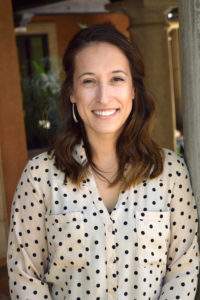
    Rosie Ronnow brings great energy to the Voices for CASA Children team as its Training and Program Coordinator. Rosie has a background in community development, health education and volunteer management, and received her Master’s in Public Health in 2015 in Australia. She is passionate about creating healthy communities where children can thrive, and supporting the many amazing volunteers who work with children in Maricopa County’s foster care system. Rosie is an Arizona native, yet spent four of the last six years expanding her horizons abroad, having lived in Denmark and Australia. She enjoys traveling and hiking, and spending time with her husband, David, and new baby girl, Sienna. Rosie is also the proud mother to one “fur baby”, Gunner.


Thank you for your interest in becoming a CASA.

After completing this form you will be directed to the CASA volunteer application which is located on the CASA of Maricopa County website. If you have any questions please contact us at info@voicesforcasachildren.org.

Thank you! You will now be directed to the CASA application. Feel free to call us during business hours - (480) 685-4888.

Learn More header

Thank you for your interest in becoming a CASA.

After completing this form you will be directed to the CASA volunteer application which is located on the CASA of Maricopa County website. If you have any questions please contact us at info@voicesforcasachildren.org.

Thank you! You will now be directed to the CASA application. Feel free to call us during business hours - (480) 685-4888.