Category: CASA Help Guides
-

Meet the McConnell’s, Where Love Is Everything
With a heaping cup of compassion and the help of “The Village”, the McConnell Family is evidence of the healing power of love in the lives of youth who need it most.
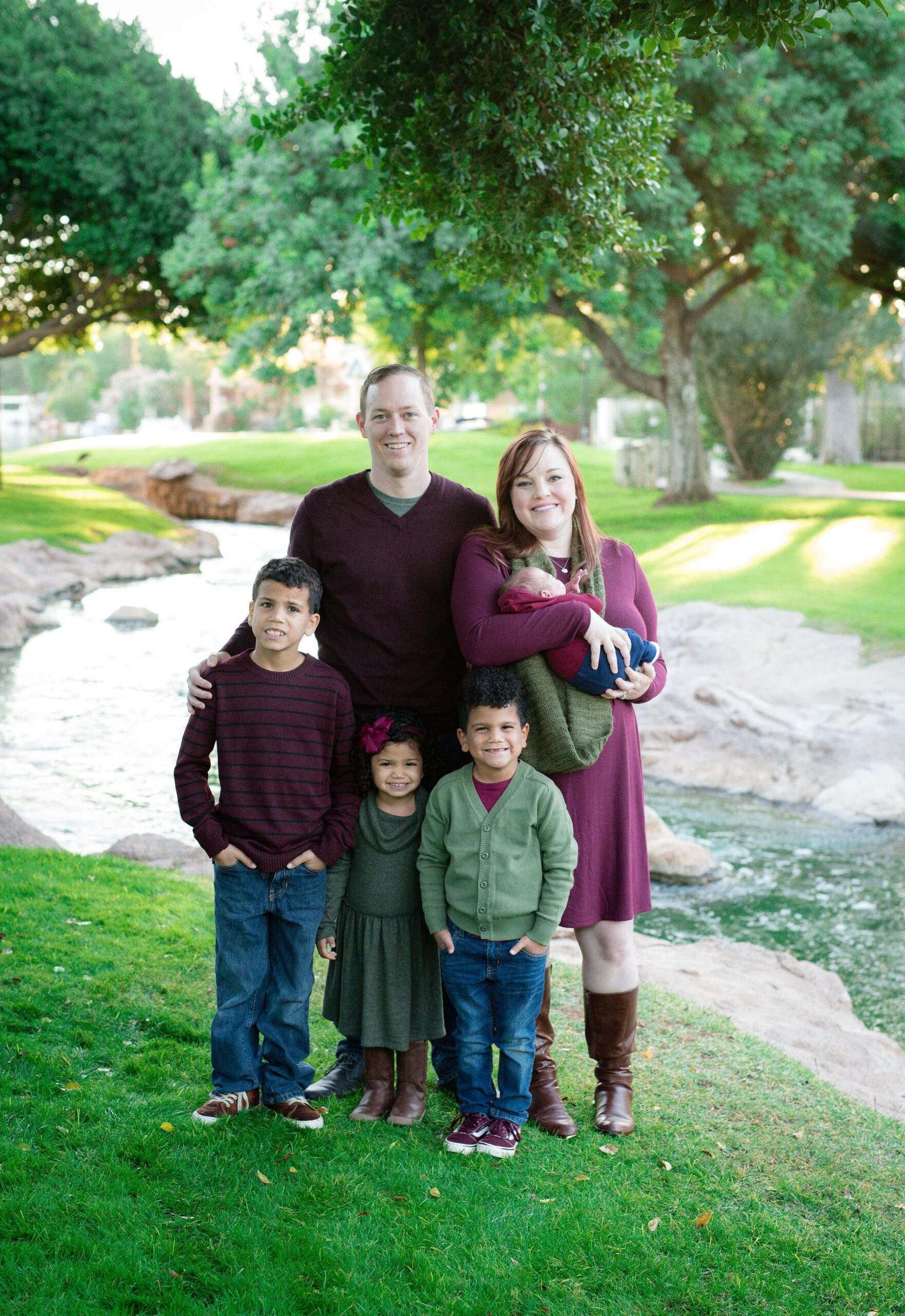
Sean McConnell is a web designer by profession and an Arizona sports fan by heart. He is also part of the two man team at Kazual Sports Radio Network, an Arizona-based radio station that exists to bring a community voice into the local sports scene as well as be a force for good in the Valley. Aside from the hustle of social media, radio shows, and web programming, Sean is a husband and also a father to three adopted children, a foster child, and two pups. It’s no doubt he and his wife have their hands full with careers, kids, and “fur babies” to tend to!
But Sean’s story is far from average when it comes to fatherhood and raising children.
“We were one of the first in our friend-group to get married, and the first to start a family.” Three years after Sean and his wife, Alex, said “I do”, they decided to look into adoption. “We realized there is such a need for children without families to have a permanent, safe space. So, we looked toward adoption. When we saw that children out there are hurting, especially children with unique needs, we believed we could do something. We chose medically complex cases because they are typically the kiddos that are left behind. We want to make sure that these kids are given the best chance at a normal life. Love can be very healing.”
Sean and Alex began their adoption journey in 2015 with baby Ezaylea. Soon after, her brothers Ethan and Elijah joined the McConnell Family through the adoption process. And soon after that, a baby boy joined as a foster placement. It’s a full house, to say the least, with daily opportunities to utilize the help of a village. All four of the siblings experience varying degrees of emotional and mental challenges, such as high functioning autism, post traumatic stress disorder, and potential for schizophrenia.
“Because of the trauma in early childhood, they’ve needed so much special attention. My wife Alex holds a masters in psychology with a minor in family & human development. She has training in the behavioral health field, which has helped a lot. Our families rallied around us, too. Our parents took them on as their own. It has definitely taken the support of a village to make this happen,” says Sean. “We joke that some days it’s like intercepting a tornado in our living room with our bare hands. But it’s all worth it. If it wasn’t for us, these kids would be somewhere else.”
Sean’s advice for assisting children in need, or making the jump to adoption? “Start small,” he says. “There’s no training that can truly prepare you for it, so open your arms to something small. Take everything one bite at a time, then hold on when it’s a roller coaster; it’s so rewarding! There’s nothing better or greater than seeing something like the help of a village come out to help these kids. There are so many resources out there, you just have to look for them. No baby is perfect; but every baby deserves love.
“Our family–we’re all so different and so similar in many ways. Once these children received services and they help they needed, they were able to accept and give love; it was a huge relief! Now I have these little goofballs, each with varying degrees of sarcasm. They love being active and playing sports (we’re big Arizona sports fans, of course!). We make it a point to spend time that way.”
Sean and Alex’s story holds the essence of service, heart, and the power of community. Similar to the McConnells, Voices for CASA Children believes that it takes a Village to raise our youth. Everyone can do something, be it foster, adopt, advocate, mentor, donate. Interested to learn more about being a voice for an abused or neglected child? Begin the journey by attending an Information Session via the Events page.
-

What It Takes to Be a CASA Volunteer
Representing a child in court may be the most important thing you ever do. Learn the special skills and time required to make this big impact.
Volunteer work is not a new concept. The usual opportunities include packing grocery boxes at food banks, finding gifts for families in need during the holidays and walking or running in a free T-shirt to raise awareness about X, Y or Z disease. But many want to do more and want to give back in a way that will leave a lasting impact while seeing efforts. A viable solution may be improving young lives by volunteering with children and becoming Court Appointed Special Advocate (CASA) through CASA of Maricopa County. But what does it truly take to be a CASA volunteer?
It Takes Dedication
More than 9,000 Maricopa County children are currently living in foster care after having been removed from abusive or neglectful situations. The Department of Child Services (DCS) case workers, counselors and guardian ad litems assigned to their cases often have large caseloads. CASA volunteers, on the other hand, typically work one case at a time. They become a constant in a child’s life, getting to know the child and developing a trusting relationship with him or her. Advocates work closely with the child’s DCS case manager, family, teacher, counselor and other professionals involved in the child’s life to ensure child welfare by making recommendations to the court, helping to ensure the child’s educational, medical, emotional and developmental needs are being met.
It Takes Communication Skills
CASAs act as the judge’s eyes and ears throughout a case and report back to the court through written reports and oral testimony. Based on facts gathered through their communication with other professionals on the case, CASAs make recommendations to the judge about what’s in the best interest of the child. CASAs work to bring services to children in a timelier manner. They take in to account the needs expressed by the child and all professionals working the case to provide an objective report to the judge.
It Takes Time
The average child welfare case lasts 18 months, but some go on much longer and CASA volunteers are asked to see them through. After the initial 30-hour training program, CASAs spend an average of 15 to 20 hours a month working their cases — although that can vary depending on the complexity of the case and needs of the child. But that doesn’t mean being a CASA isn’t possible while working a full-time job or having other commitments. In fact, more than half of CASA volunteers are employed full-time. Aside from biweekly visits with a CASA child and court appearances that are typically scheduled every three to six months and occasional meetings with other professionals, most advocacy work can be done through email or by phone. Being a CASA volunteer takes more commitment than some other volunteer opportunities, but it’s worth it. Studies show when compared to children who are not represented by CASA volunteers, children with CASAs are:
- More likely to get the services they need in a timely manner
- Less likely to be moved from placement to placement
- More likely to do better in school
- Less likely to return to care after being reunited with their birth family
- More likely to spend less time in foster care overall
And those are outcomes that make a real difference. If you’re ready to get started, see the first seven steps in becoming a CASA and fill out our online Volunteer Certification Application.
-

‘Be the Person You Needed When You Were Younger’
This is powerful quote from scientist, political commentator and author Ayesha Siddiqi has inspired many, including two Arizonans who felt compelled to help children who have been abused and neglected. Here, they share their powerful stories.
Author and advocate, Ayesha Siddiqi, believes passionately in providing a voice for those who cannot speak on their own. Her most well-known turn of phrase highlights the importance of providing that voice by being there for our youth: “Be the person you needed when you were younger.”
Whether, physically, emotionally or spiritually, communities are needed to show up for disaffected youth in a way that many might have found valuable in their childhood. When Siddiqi tweeted out this statement in 2013, it caught on like wildfire and various forms of the message were scattered across social media and the Internet as more and more individuals have supported the message of child advocacy.
Voices for CASA Children along with CASA of Maricopa County works to carry this message forward with the work of tireless volunteers and staff, who support Court Appointed Special Advocate (CASA) volunteers. Below, two CASAs who have made the commitment to spend their spare time advocating for foster children reflect on their experiences.
‘She’s brought a light to my life.’
When CASA volunteer Karolina Donis sees the look on her foster child’s face, she can see the impact she’s making on her life. Throughout what is undoubtedly a difficult time for her appointed child, Donis is providing her with a much-needed outlet and source of comfort. As they get to know one another, they will form a bond that will help the child reach important milestones in her personal progress, as well as aid court proceedings with the information Donis is able to gather from their interactions.
Even after her appointed child achieves permanency with a new family, Donis hopes to stay in close touch and help her through important times in her life because, as she says with a smile, “Yes, it’s a benefit to her, but it’s even more of a benefit to me because she’s brought a light to my life. She’s given me a way that I feel like I’m really making a difference in the community.”
Similarly, veteran CASA volunteer Lawrence Falvey would often travel for work, but when that subsided, he wanted to do something to give back to the Valley. Falvey became a CASA, and he says being a CASA has absolutely benefitted his life. “I feel like I get more out of this than the kids do,” he says. The experience has also taught him that, “No matter the circumstances, the human spirit, given encouragement and some nurturing, can really rise above some crummy situations. And, gosh, for me to witness that and be a part of that, it’s just uplifting.”
Donis and Falvey were both inspired to act and become CASA volunteers. Donis’ work as guardian ad litem for her foster youth and Falvey’s work as a CASA deepened their connection to their community and furthered the VOICES mission. They and the extended network of CASAs serve the needs of the over 9,000 children in Maricopa County to support and give them a voice. But there are so many more who are waiting to receive their advocate to provide them with a voice and an opportunity to see a brighter future.
‘Be the person you needed.’
When people volunteer with CASA of Maricopa County, they are finding the opportunity to live out Ayesha Siddiqi’s creed and build a foundation to improve child welfare and inspire the next generation of community leaders. By being the person they needed when they were younger, Donis and Falvey are ensuring a positive outcome for foster children and making an impact that will have a powerful ripple effect throughout their community.
To volunteer with Maricopa County CASA, fill out our online application and begin the path to becoming the person you needed when you were younger for someone who needs you today.
-

7 Steps to Becoming a CASA Volunteer
What are some of the initial steps to becoming a Court Appointed Special Advocate? From the paperwork and interview to the pre-service training, learn how to become a much-needed voice for foster children.
Many love the idea of volunteering with children, which may lead to the decision to become a Court Appointed Special Advocate (CASA). But how can people actually get started? Here are the initial steps for becoming a CASA volunteer.
1. Fill out a casa program online application.
The process for becoming a Court Appointed Special Advocate (CASA) starts with filling out an online application. Potential volunteers will need to provide contact, residency and employment information and list any languages spoken in addition to English. CASA volunteers are a diverse group of adults with work experience in many different industries. Being able to use a computer, access to reliable transportation and having effective written and verbal communication skills are the only requirements for becoming a child advocate. No legal or child advocacy experience necessary. Applicants will also be asked to provide three nonfamilial references, so have their names, phone numbers and email addresses handy when filling out the application.
2. Consent to a background check.
The CASA program application also asks for personal identifiers —including height, weight and birthdate — and inquires about any criminal history. This information is necessary for conducting a background check and will not be shared with anyone outside of the application process. The background investigation conducted by CASA will include fingerprint and polygraph exam. The polygraph is simply a reconfirmation of the information provided in the CASA application — it’s no sweat.
3. Schedule an in-person interview.
Once applications have been reviewed, someone from CASA of Maricopa County will contact applicants about setting up an in-person interview. Interviews are generally conducted Monday through Friday between 8 a.m. and 5 p.m. During the interview, applicants will be asked about their personal background and interest in becoming a CASA volunteer. Potential volunteers will also have the opportunity to get their questions answered.
4. Attend advocacy training.
Training on how to be a Court Appointed Special Advocate is offered every month. As soon as the steps above are complete, applicants will be eligible to register for the two-day state office training and the 4-hour county training. The program will prepare volunteers to work independently as a CASA volunteer and will cover such topics as child psychology, the foster care system, working with the Department of Child Safety, juvenile court proceedings and the nuts and bolts of conducting CASA duties and using the computer system.
5. Get sworn in.
CASA volunteers work on behalf of the court, so after the successful completion of the background check and the different training components, you’ll be sworn in by a judge as an official Court Appointed Special Advocate.
6. Select a case — and get started!
Once sworn in, it’s time to get started on the first case. As a new volunteer, you will have the opportunity to select from three to five cases hand selected for you based on your interests by your CASA staff member. After reading through the case file and speaking with the assigned DCS case manager, CASAs will have their first visit with a CASA child where they’ll begin building a relationship and making a difference.
Before you know it, you could be well into this impactful program. Check out a CASA reflecting on her first year as an advocate.
Get Started Today!
Fill out the online Volunteer Certification Application to get started on your path to transforming a child’s life.

-

My First Year as a CASA
One volunteer shares the key moments of her first year as a CASA, reflecting on the training process, selecting her first case and how incredibly rewarding the experience has been.
Heather Varela first heard about volunteering as a Court Appointed Special Advocate (CASA) through Voices for CASA children in a radio ad while she was driving more than a decade ago. It wasn’t until her children got a little older and she started working from home that she applied. Now with two cases and a year and a half under her belt, Varela reflects on her first year as a CASA volunteer and how incredibly rewarding the experience has been.
On the Application Process …
“I applied to be a CASA volunteer in fall 2016. I submitted my application, and from there you go through an interview process with a CASA project manager. After that, you take a lie detector test. It’s just part of the process and not a big deal. They just want to ensure all of the statements you made on your application are accurate, so they can protect the kids.”
On the Training …
“Once you are fully vetted as a CASA volunteer, then you start a 30-hour training class. The training was amazing. We had training on everything from psychology of kids at different ages to how the court system works to how DCS [Department of Child Safety] functions. Pretty much every component of this system was represented. We were also given instruction on the practical nuts and bolts information of how to do the job.”
On Selecting Her First Case …
“After we completed the training, we were sworn in as officers of the court and were allowed to select our first case. There are a number of cases to choose from, because there are always children in need of a CASA.
“In the first case I selected, there were four children. Three of them were placed with a family and one was placed in a group home. It just broke my heart, and I wanted to help.”
On Meeting Her CASA Child for the First Time …
“My first interaction was with the child who was in the group home. He’s kind of a quiet guy, so I just sat down and told him a little bit about who I was and why I was there. We then talked about what was going on with him, how long he’d been at his group home. He had not been successful at some other group homes, and so we talked a little bit about why, and really just spent about an hour getting to know each other.”
On Working a Case …
“After that, the rest of the first year is really just about working your case. There’s a whole team of people that work on these cases alongside you — the DCS case manager, the guardian ad litem and the counselor. In some ways you kind of become the project manager for the team. You are the one to shepherd the process along and make sure that meetings are happening and that anything you observe going on with the child is being addressed with the appropriate services. Sometimes it’s as simple as arranging transportation [for the child] to a counseling appointment.
“And then, as the eyes and ears of the court, we provide a report to the judge and actually speak in court about every six months summarizing what’s happening with our child and making recommendations for things that we think would be helpful for him or her.”
On being a CASA One Year Later …
“It’s really rewarding. I absolutely love it, and I enjoy spending time with the kids. I enjoy seeing them grow and develop. Some of the kids I’ve worked with have had major turnarounds. If there’s a way that I can help even one child feel not so lost, then it’s worth it.”
Would you like to learn more directly from out volunteers? Read this Q&A with a veteran CASA.
Ready to Volunteer?
Fill out the online Volunteer Certification Application to get started on your path to transforming a child’s life.

-

Q&A: An Insider’s Perspective on Being a CASA Volunteer
A seasoned CASA volunteer shares the impact his advocacy has had on the children he has helped — and on himself. It’s a journey he would take all over again.
Becoming a Court Appointed Special Advocate (CASA) is a big commitment, but there’s only so much prospective volunteers can learn about the job from a website. Here, veteran CASA volunteer Lawrence Falvey shares what his experience has been like.
VOICES: How did you get involved with CASA of Maricopa County?
Falvey: I had been traveling a lot for work and when I got back, I wanted to do something to give back to the Valley. I saw an ad on volunteermatch.org about being an advocate for children in court.VOICES: What drew you to becoming a CASA volunteer?
Falvey: I liked the idea of helping children. I’ve participated in things like fun runs for Down syndrome in the past, but what I like about the CASA program is you have the same child and you’re seeing them through the process rather than just a one-and-done kind of thing.VOICES: How much time do you spend each month on CASA volunteer duties?
Falvey: It’s more hours when you’re just starting and getting to know your kid, but then you get into a rhythm. They say 15 to 20 hours per month, and I think that’s pretty honest. You’re required to see your CASA kid every two weeks, but I try to see mine once a week. Then there are meetings, court appearances and emails and reports to write. So, it does take up some time, but it makes up for all the years I wasn’t able to give back because of my travel schedule.VOICES: How many cases have you had in your three and a half years as a CASA volunteer?
Falvey: I’ve had two, which is kind of unusual. I like to select cases that involve teenage boys because it’s harder to place kids that are almost grown. And their cases generally last a little longer than, say, cases with a baby or a toddler.VOICES: Do you keep in touch with your CASA kids after their cases close?
Falvey: It’s up to the adoptive parents, and the child, of course. My one child was adopted, and his family said they wanted to stay in touch with me, so, I can contact them and see how he’s doing. But my other child didn’t have a great experience in foster care and when he turned 18, he moved away, so I don’t have contact with him.VOICES: That must be hard, losing touch like that.
Falvey: Yeah, but the fact is, that’s a little bit of what you sign up for. You have to go in understanding they’re in a tough situation and they may not want to be reminded of that after hopefully going to a better place and moving on with their life.VOICES: What has surprised you the most about being a CASA volunteer?
Falvey: What’s surprising to me is how dedicated and thoughtful most people in the system are. Child protective caseworkers can have 40, 50, even 60 children in their caseload, and guardian ad litems, they have like 125 kids. It can be a very frustrating job to have to deal with some of these situations day in and day out, and I am very impressed with the dedication of the folks I’ve come across.VOICES: Is there anything else you’d like people to know about CASA?
Falvey: Just that we need more CASA volunteers, especially males. Half the kids in foster care are female and half of them are male, yet only 25 percent of CASAs are male, so I would say, hey, men, get out there and do your part, because there are kids in need.Interested in Being CASA?
Get started today! Learn the 7 Steps to Becoming a CASA.
-

Professions That Make You A Perfect Fit for CASA
Those who are (or once were) teachers, day care workers, homemakers, social workers and more may make an easy transition to being a Court Appointed Special Advocate (CASA).
Right now, Maricopa County is home to more than 9,000 children in foster care and many of them could benefit tremendously from having a helpful figure guide them through this difficult period in their young lives.
CASA of Maricopa County provides advocates for children who ensure that each child experiencing foster care is treated with dignity and respect and are provided with the care they deserve. These advocates are volunteers — everyday members of the community lifting their voices to protect the rights of vulnerable children who may have endured abuse or neglect.
Some of the likeliest candidates to fit the profile of a Court Appointed Special Advocate (CASA) volunteer share current or past vocational experiences that have prepared them to lend compassionate services to youth living in foster care. Here are some of the common occupations and preoccupations that prepare many of these volunteers for the experiences they may encounter as a CASA.
Teachers and School Staff: Those who have worked at all levels of public and private education are well-suited to take on volunteer work with children in the court system — especially for those having extended breaks during the summer and winter. Using that time to take on a unique assignment will go far toward helping a child in foster care navigate the intricacies of their parents’ legal case. This is an invaluable way to give back to some of the most vulnerable members of the community. What’s more, teachers and school staff have experience in navigating the school system for children who are in the Individualized Education Program (IEP) or have a 504 plan.
Early Childhood Caregivers: In a similar way, early childhood caregivers are ideal candidates to provide the nurturing assistance and basic childcare to youth of all ages in the care of the court system. People who spend their days working in daycare facilities or preschools understand the complex physical, social and emotional developments taking place at critical young ages. When children of preschool age enter foster care, the attention and nurturing they receive can have a lasting impact and can significantly shape their ability to cope with the challenges ahead.
Early childhood caregivers are also trained to be very observant of behaviors in pre-verbal children that help them read and react appropriately to each foster child’s needs. They can communicate those needs directly to a judge to ensure the child’s best interests are kept at the forefront of the proceedings.
Social Workers and Medical Professionals: Social workers, physicians and nursing professionals possess some of the ideal skill sets for being effective CASA volunteers. By virtue of their intensive training in clinical practices, both social workers and medical professionals are excellent observers of child welfare and will understand how to properly communicate their observations to the court for consideration throughout the proceedings.
In the day-to-day of their professional lives, social workers and physicians may have frequent interactions with courts of law as advocates or expert witnesses, making them familiar with the court environment that can be very overwhelming for a child who lacks an adult advocate.
Homemakers and Empty-Nesters: You do not have to be employed in an official role to be a perfect CASA candidate. Stay-at-home spouses and empty-nesters looking to fill their free time with a meaningful activity that gives back to their community will find volunteering with CASA of Maricopa County immensely rewarding. A large percentage of CASA volunteers are at or above retirement age and benefit from the experience of a lifetime spent raising children of their own.
If you think your past experiences have prepared you to become an advocate, see what it takes to be a CASA.
How to Become a Volunteer
There are no special requirements or skills needed to begin your journey to becoming a CASA volunteer. In fact, it is beneficial to the children served by CASA that volunteers represent all areas of society, coming from different cultures, professions, ethnic and socio-economic backgrounds.
Simple requirements include:
- Volunteers are at least 21 years old
- Volunteers can complete a background check and provide references
- Volunteers will participate in at least 30 hours of pre-service training
- Volunteers are available to attend court appearances
- Volunteers are willing to stay involved with your child’s case until it is closed
Get started on your CASA journey today by starting with What Is A CASA?
-

10 Ways Being a CASA Volunteer Helps Your Community
As a CASA, you’re giving back to your community in a way that goes beyond the holiday volunteer gigs — you’re giving a child a brighter future.
Today, many feel driven to give back to their community. Those who feel they’ve received good fortune in their own lives, have made the important choice to use their influence and intellect to try to assist in challenging issues and build a foundation for those less fortunate. The problem lies in making the choice between all of the incredible volunteer and community outreach opportunities available in Maricopa County’s thriving nonprofit spaces.
If this sounds like a familiar scenario and you are looking for a way to give back and support your community, becoming a Court Appointed Special Advocate (CASA) volunteer is one of the surest ways to make a lasting impact.
Here are just 10 ways making a commitment to the foster population served by CASA of Maricopa County can create a positive and enduring mark on your community. As a CASA, you can:
- Ensure abused and neglected children have a voice
- Provide emotional support for children going through a period of uncertainty in their lives
- Provide stability to children in school, allowing them to focus on their studies
- Assist teenagers and older youths in being aware of their options after foster care
- Children who have regular access to their CASA advocate are half as likely to reenter foster care
- The presence of a CASA volunteer can decrease the amount of time a child is in foster care
- Provide kids in foster care with a consistent adult role model
- Enable greater access to valuable services
- Children in foster care without proper guidance have an increased likelihood of going down the wrong path
- CASA volunteers can help ensure that children under their care are moved less frequently from one foster family to another
Federal, state, and local officials whose responsibility it is to process children through the court and foster systems have come to rely heavily on CASA programs to improve outcomes and prevent delinquency. For instance:
- The United States Department of Health and Human Services (HHS) give their highest recommendation to CASA programs
- The Office of Juvenile Justice and Delinquency Prevention categorizes CASA as an important safety net for abused and neglected children
- The National Bar Association fully endorses the use of child advocates to prevent bureaucratic backlogs in cases involving children
- The Council of Family Court Judges has highlighted the work of CASA programs in keeping children moving properly through the foster system and ensuring long-term homes in safe environments for abused children
- The United States Department of Justice (DoJ) also found in their case studies of CASA interactions with foster children that court cases involving CASA volunteers are more often resolved than those without
By upending the status quo and providing foster kids with a path to a more positive outcome, CASA volunteers provide immeasurable impact to the community around them.
For those considering giving back to their community by becoming a foster parent, but don’t necessarily have the ability, consider becoming a CASA.
Become a CASA Volunteer
To become a CASA volunteer, contact your local CASA program to begin the application process. As soon as you have completed the minimum required hours of training, an Order of Appointment (OA) will be drafted to officially assign you to a case. Begin your CASA journey today by visiting What Is A CASA?