
Victoria Strayer, one of the co-founders of Voices for CASA Children, recently reported on the CASA program in The Daily Independent. Check out the article online or download it as a pdf.
Category: VOICES News 2024
-
CASA Volunteers Needed – Fox 10 Dec 2024 (Video)
Tiffany Hunter appears on Fox 10 to explain the CASA program. 5,000 children are in the foster care system and are in need of a CASA, or Court Appointed Special Advocate. A CASA enables these children to have their voices heard.
-
Tiffany Hunter on PBS Horizon Dec 2024 (Video)
5,000 children are in the foster care system and are in need of a CASA, or Court Appointed Special Advocate. A CASA enables these children to have their voices heard.
-
The Road To Becoming A CASA on Good Morning America (Video)
This Good Morning Arizona segment aired December 2024. It brought attention to VOICES for CASA Children, the CASA program and more importantly, the estimated 5,000 children in foster care.
-
Voices of Hope – Simple Joy!
The holiday season is in full swing! The hustle and bustle of shopping lists, party plans, and endless to-dos. Amidst the flurry of activity, there can be moments of magic if we slow down to embrace the simple joys.
This season, let’s be inspired by conversation and connection. Let’s strive to be present, not perfect.
We know CASA volunteers are present and bringing hope and connection to youth during the holidays, and all year round. We are deeply grateful.
We wish you a simply joyous holiday season!
In The Spotlight – Annual Gift Drive

The moment a child opens a gift and feels pure joy, when love replaces worry—that’s the magic we hope for during the holidays.
The VOICES Gift Drive goes beyond simply collecting brand new items for CASA youth. It’s about giving children a sense of normalcy and allowing them to experience the same excitement and wonder that other children feel during the holiday season.
With the support of a CASA volunteer, these children will receive thoughtful, age-appropriate gifts, helping them feel special and cherished.
The gift exchange also strengthens the bond between the child and their CASA volunteer. This connection with a stable, caring adult builds resilience and offers a sense of security through the holiday season.
None of this would be possible without the incredible support received by the community, and we are deeply grateful for it. VOICES invites you to shop the Amazon Gift List to have brand new items shipped directly to the VOICES main office. Making it easy for you to make an impact and easy for VOICES to get these items into the hands of the kids who need it most.
Your Impact – Your Why – Donating This Holiday Season

A child who has no reason to trust, finds a way to open their heart. They brighten knowing they have consistency not disappointment. This leads to honest conversation about what happened and what they need.
The CASA volunteer is that vital lifeline that can now advocate for the child’s best interest.
You help us support that lifeline so children can dare to believe in hope and can accept joy into their hearts.
Read My CASA Journey to learn more about why your impact is so important.
My CASA Journey – Making a Homecoming Dance Possible

Fall is the season for homecoming dances in high school that not only create memories but generate a sense of belonging for teens in foster care. These events have challenging costs for anyone. Especially for a young teen in kinship care who shared with his CASA volunteer how he wished he could attend the dance that was ONE week away.
In less than three days, his CASA coordinated assistance from Arizona Friends of Foster Children (AFFCF) and VOICES to obtain funding for a suit and dance ticket. His CASA shared, “These are the moments that feel good… to be able to bring some joy to your kiddo’s life!”
In Focus – Arizona QFCO Tax Credit*

Make a positive impact in your community!
Arizona tax payers have an incredible opportunity to make a meaningful impact in their communities while reducing their state tax liability. The Arizona Qualified Foster Care Charitable Organization (QFCO) tax credit program enables taxpayers to support youth living in foster care and receive a dollar-for-dollar credit against their state income tax. This is a direct reduction, not deduction. Tax credit thresholds are adjusted annually.
The maximum tax credit threshold for the 2024 tax year:
- $1,173 for married couples filing jointly
- $587 for single filers, heads of households, or married couples filing separately
These contributions help foster care charitable organizations, such as VOICES, to achieve their mission and bring hope to youth whose life circumstances have led them to be removed from their homes.
You must make your donation by the tax filing deadline – April 15, 2025, for the 2024 tax year. Provide your donation receipt to your tax preparer or use Form 352 to claim the QFCO credit on your state tax return.
Be sure to include the VOICES QFCO #10010, which is also included on your donation receipt. Additionally, you may also qualify for a federal tax deduction if you itemize your deductions.
Important Note: Arizona allows stackable tax credits. This means the QFCO tax credit can be combined with other Arizona tax credits, such as those for public schools, private school tuition organizations, and other charitable organizations (QCO).
Thank you for choosing to direct your resources toward hope!
Arizona Department of Revenue’s information on tax credits.
Strengthening Advocacy Through Education – The Complexities of the Holiday Season

For children living in foster care, the holiday season can bring joy and wonder—but it can also stir up complex emotions. Memories of past holidays, missed traditions, and uncertainty about the future may weigh heavily on their hearts. During this time, having a compassionate adult to recognize and support their emotional needs can make all the difference.
In the latest episode of the VOICES podcast, we explore how to support youth through these challenging moments.
Guest speaker Allison Maxon Davis, M.S., LMFT, highlights the crucial role advocates play in helping children stay grounded in the present. When emotions become overwhelming, children benefit greatly from a caring, authentic adult who can regulate their own emotions and create a safe space for the child to express themselves.
Listen to the Full Podcast to learn more about supporting youth with their big emotions.
Positive Outcomes – Reflecting on National Adoption Month

As we turn the page on National Adoption Month, we reflect on the incredible impact of adoption and the importance of creating safe, loving, and permanent homes for children living in foster care. For the thousands of children in need of stability, adoption offers not just a family but a foundation for a brighter future.
At Voices For CASA Children, we witness firsthand the life-changing impact adoption can have on a child. With the unwavering support of CASA volunteers, children living in foster care are given a voice in the court system and an advocate for their well-being. CASAs work alongside child welfare professionals, families, and the courts to ensure that every child has the best chance of finding a permanent, loving home.
This November marked the 25th Annual National Adoption Day celebration in Maricopa County. Since its inception in 1999, this event has finalized more than 4,500 adoptions in the county, helping children join forever families and transforming lives in the process.
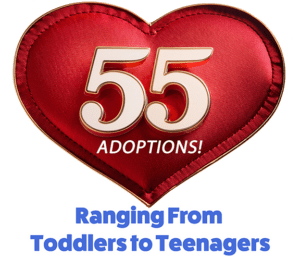 This year’s celebration featured the finalization of 55 adoptions, ranging from toddlers to teenagers, and underscored the profound love and dedication adoptive families bring to the table.
The day was filled with festivities, including face painting, games, and a special visit from the Phoenix Suns Gorilla, making it a joyful and memorable occasion for families and children alike.
Although National Adoption Month has ended, we’re reminded that the journey toward permanency is a year-round collective effort. CASA volunteers, adoptive families, and community advocates play a vital role in ensuring every child feels valued and supported.
Thank you to the adoptive parents who open their hearts and homes, creating a nurturing environment where children can heal, grow, and thrive. Adoption journeys can be challenging, but they are also filled with hope, resilience, and love. The impact adoption can make in a child’s life is immeasurable, offering them not only stability and care but also the chance to dream, succeed, and flourish in a forever family.
Community & Youth Connections – Partners in Advocacy

CASA support councils from across Arizona convened this fall to collaborate and share knowledge, resources and efforts, all aimed at enhancing the well-being and outcomes for youth living in foster care. These dedicated community members highlighted such priorities as addressing essential and emergency needs for children, providing support for kinship caregivers, creating welcoming, safe spaces for family visits, birthdays and other events, innovative partnerships (like an orthodontia program), and enriching the lives of children through outings, camps, lessons and other experiences that foster joy and a sense of normalcy.
CASA support council members also toured Red Hawk Ranch, an innovative mountainside home located in Navajo County, which provides placement and supporting services for sibling groups in a family-like setting where brothers and sisters can live, play and attend school together.
If you would like to learn more about how you can make a lasting impact as a CASA volunteer, please join us for an upcoming Information Session!
(This was the Voices of Hope, December 2024 newsletter. Subscribe to receive more.)
-
Voices of Hope – Do It Together!
As the fall season unfolds we know it can be a time of excitement, change, and, at times, uncertainty—especially for children and families. This month’s edition is designed to help navigate some of those challenges by recommending timely and age-directed resources and insights.
From guidance on how to discuss difficult news stories with children, to preparing for the upcoming holiday season, we hope to provide our readers, and CASA volunteers, support opportunities.
Thank you for being part of this incredible community that continues to bring hope and light to young lives.
In The Spotlight – Current Events & Today’s Kids
Children are filled with wonder and curiosity. However, sometimes explaining life events to them in an age-appropriate manner can be a little tricky. Talking about the impacts of severe weather, such as Hurricane Milton, or the importance of casting a vote may require a thoughtful approach. Don’t shy away from these important conversations.
Each day life offers us opportunities to teach and to learn. Fortunately, there are various resources available to help adults communicate with children on a wide variety of topics.
Here are just a few:
The New York Times Learning Network: Geared toward middle and high school students and offers news-related resources to encourage thoughtful discussion.
Scholastic Kids Press Corps: An educational news source written by kids for kids. It covers current events in a way that is easy for children to understand.
iCivics: Founded by former Supreme Court Justice Sandra Day O’Connor, offers educational games and lesson plans on government, law, and politics
News-O-Matic: A daily digital newspaper for kids that explains current events in kid-friendly terms. Available on app stores.
My CASA Journey – Time To Talk

A CASA’s journey involves lots of observation and listening – to case workers, teachers, and placement families – and most importantly, the child. VOICES plans activities and experiences for the CASA to share with the child for a little fun but also because they build trust and time to talk. CASA volunteers are good at mixing a teen’s choice of frappuccino with tough conversation. Or letting the giggles out on the playground swings enough to also share what they are a little sad about.
Time to talk can happen at any moment – in the drive through or after a long afternoon at the zoo. Being present, being available and the gift of time is what these youth need.
As Dr. Bruce Perry once noted at a VOICES event, “if you take people with big hearts and good intentions and support them with a little bit of information they can be a tremendous source of healing and positive regulation for these children and the families they are working with. This is why I have always loved the CASA model. The power of proximity cannot be underestimated. You may be the only person in their lives who is present and isn’t getting paid.“
Positive Outcomes – When Families Talk

Recently, one of our staff members shared about how his family watched the movie ‘Instant Family’. The film highlights the realities of foster care and adoption, including the wide-range of emotions and many unexpected rewards. He used the experience to prompt family conversation about being a foster family.
Family conversation is a powerful tool that builds trust and resilience. Like any other skill, it takes practice and should be used regularly! Youth learn how to ask questions and express opinions in a safe environment.
Put phones and video games aside and talk about a child’s day, discuss the book they are reading or tell them about your trip to the market.
Give it a try – If you need help getting started check out:
The Family Dinner Project: Resources, conversation starters, and activities to encourage family mealtime discussions.
The Gottman Institute: Articles, online courses, and resources on how to communicate effectively within families and build emotional intelligence
Community & Youth Connections – Halloween Town

VOICES is excited to share that some CASA Volunteers have the opportunity to take their appointed youth to enjoy a day of spooky fun at Halloween Town AZ. This is made possible by generously donated tickets. Thank you Halloween Town!
With pumpkin painting, rides, and festive games, this event offers a wonderful opportunity for the youth to experience the magic of Halloween in a safe, family-friendly environment.
In Focus – Arizona Department of Child Safety Fiscal Year 2025-2029 Strategic Plan

DCS continues to build on their successes and their learnings to promote shared values of Safety, Compassion, Change, Accountability, Equity, Advocacy, Family, Engagement and Teaming. The focus of the five year plan encompasses Prevention, Strengthening Families, Diversity, Equity, Inclusion and Accessibility, Professional Development and Kinship.
One focal project being launched is a statewide effort to safely reduce the utilization of congregate care, or group care facilities, when appropriate. The preference is to place youth in more family-like settings where they can thrive.
DCS will continue to address concerns of child abuse and neglect while strengthening families to promote safe living situations and healthy relationships.
Learn more about the details of each initiative, target timelines and success measures.
Strengthening Advocacy Through Education – Promoting Resilience & a Sense of Safety

For many children—and adults—who have experienced trauma, structure and routine provide a sense of stability. Being able to anticipate what comes next can significantly reduce anxiety and feelings of dysregulation. However, as the holiday season approaches, changes in daily life are inevitable. Fall break, holiday activities, and spirit weeks are just a few examples of events that can disrupt a family’s routine.
During this season, it is crucial for adults to support youth with strategies that promote resilience and a sense of safety. One effective approach is to create a family or individual child calendar that clearly outlines upcoming activities and schedule changes. Another helpful strategy is to plan a calming, regulating activity after any change in routine. This could be something as simple as a daily walk, playing catch, or dedicating time each day for meaningful connection.
For valuable insights on promoting felt safety, take a look at this infographic by Robyn Gobbel.
(This was the Voices of Hope newsletter, October 2024. Subscribe to receive more.)
-
Voices of Hope – My Heroes!
Celebrate the extraordinary impact of kinship and family! September brings us both Grandparents Day and National Kinship Care Awareness Month, A time to honor the incredible grandparents, relatives, and close family friends that step up so that children can avoid non-familial foster placement and remain with family.
These heroes give love, stability and a sense of belonging, keeping families connected during challenging times. Read on to learn about the vital role of kinship families in creating hope so youth can thrive.
In The Spotlight – What is a Kinship Family?

A ‘Kinship Family’ is a structure where children are raised by non-parental relatives. At times it can include other siblings or cousins that are also being raised by the same kinship caregiver. We have many kinship families in our community.
‘Kinship placement’ occurs when a child is placed with a relative or close family friend, also known as fictive kin. This type of placement is often considered when the child’s safety, well-being, or developmental needs are at risk in their current environment. The goal is to provide the child with a stable and supportive environment that is familiar and maintains a connection to their family, culture, and community.
Kinship caregivers, who may be grandparents, aunts, uncles, older siblings or close family friends, often receive support from child welfare agencies, including financial assistance, access to resources, and guidance on how to meet the child’s specific needs. However, given the circumstances, the level of support can vary and is typically not quite enough.
CASA Volunteers can be appointed to youth in a kinship placement. A CASA Volunteer can also help an appointed youth living in foster care or a group home identify potential social relationships, such as coaches, neighbors, etc. who have an important relationship with the child and could potentially serve as fictive kin.
As always, a CASA Volunteer’s recommendations are critical in every case and with every child.
My CASA Journey – Supporting Grandparents

As an advocate, a CASA gets to know the child’s foster, group or kinship home often referred to as “placement.” Sometimes a CASA finds advocating for the child means being a conduit to help placement find much needed resources.
For example, placement might be a grandmother now caring for her grandchildren – a new dynamic made more complex with financial and legal challenges.
But awareness of community partners such as Duet for Grandparents can mean education, grand family outings and even a GrandKin cafe for her to connect in person with other grandparents.
Said one CASA: “My current child is in a kinship placement & this has been a really great resource for me to share with the child’s grandmother.”
A supportive community surrounds youth in foster care and CASA volunteers help make those connections.
Positive Outcomes – Why They Do It

Many times kinship families are created during times of trauma. An infant is born substance exposed. Parents are experiencing poverty or are homeless and can’t care for their children. There is domestic violence in the home.
When a family member receives the call to help they are dealing with much more than just the responsibility of taking care of the child(ren) who are moving from an unsafe home. It may be their own child, or their sibling, whose struggles have led to this traumatic time. The day-to-day dynamics of the now evolving family unit can be difficult.
However, kinship families come together to preserve the family bonds and ensure it is strong and sustainable. There is continuity in everything from the daily routine to family traditions to religious and cultural observations.As a result, infants grow with their own family from the start. Siblings stay together. Children do better in school with less disruption.
Kinship Caregivers do it because they love their family – They are generational heroes and we honor them every day!
Community & Youth Connections – Celebrating Kinship Caregivers

There are many celebrations occurring throughout the state to appreciate and support kinship families. One such event is being held in Phoenix at Pilgrim Rest Baptist Church.
GreyNickel Inc., an organization that focuses solely on kinship families in the early stages of this unique journey, has partnered with Pilgrim Rest Community Hub to pay tribute to kinship and ‘Grandfamilies’. These Kinship caregivers are honored with a luncheon and connected with kinship focused resources and health and wellness vendors.
Pilgrim Rest has also been a supporter and previous host of Maricopa County Family Reunification Day and is dedicated to providing guidance, hope and support to everyone in need.
If you know a kinship family be sure to offer empathy and support all year long.
In Focus – Finding Kinship Connections

Maintaining family connections and cultural identity is crucial for children who are being removed from their homes and in need of safe alternative placements.
Policies that support kin-first strategies and a society that values kinship families can help reduce barriers and increase collaboration with community service providers.
Learn more about kinship search and engagement in this brief: Casey Family Programs.
Strengthening Advocacy Through Education – Kinship Support Services

The Arizona Department of Child Safety emphasizes the vital role that kinship care plays in providing more stable and nurturing placement options for children in foster care. DCS highlights that “when children are with kinship caregivers, there is reduced trauma and children are able to thrive.”
Earlier this year, DCS launched the Kinship Support Services (KSS) contract, which is dedicated to, “to further increase the number of children in kinship homes, improve the supports required to stabilize living arrangements and assist families in navigating the child welfare system while caring for children placed in their homes.”
At the program’s inception, DCS representatives met with CASA volunteers at the VOICES office to discuss the KSS program and explore how volunteers can assist families by connecting them with these crucial services. The training participants were enthusiastic about the initiative and fully supportive of the mission to empower kinship families. As the KSS program evolves, VOICES will continue to inform CASA volunteers about how these services can best support the youth they serve.
Learn more about the KISS Program.
Arizona Department of Child Safety. Service Guide: Kinship Support Services. Arizona Department of Child Safety, 26 Feb. 2024
(This was the Voices of Hope newsletter, September 2024. Subscribe to receive more.)
-
Voices of Hope, We’re Ready!
Summer days are giving way to the excitement of a new school year! We are grateful for all those who support youth in their educational journey. CASA volunteers also make a profound impact on youth living in foster care so they enter this school year more confident.
Thank you!
In The Spotlight – Wellness For Kids

Back-to-school is here! As we go over the checklist of school supplies and things to do, let’s be sure to include a wellness break for ourselves and for our young students. Children have mixed emotions upon entering the classroom. Excitement, apprehension and everything in-between!
It’s important that even children learn about self-care. CASA volunteers have the opportunity to explore these skills with their appointed youth. By creating healthy routines for children, we help them feel empowered and in control.
Try these self-care tips for kids at PBS Kids – they might be good for adults too!
My CASA Journey – ABC’S – Advocacy, Backpacks and Compassion

Back to school is an important time for youth in foster care and the CASA volunteer. It’s important to help start the new school year with brand new supplies just like everyone else. Thankfully, our VOICES community responds with boxes and boxes filled with quality supplies and hope!
The CASA volunteer sees the challenges a new school year (and sometimes a new school) might bring to a child navigating foster care. As a Court Appointed Special Advocate, the volunteer has the ability to meet teachers, review school records and advocate on behalf of the child’s educational needs. This can be a mix of keeping teachers informed, requesting specific assistance, finding resources for uniforms – and yes, providing that new backpack filled to the brim.
“Oh my – received the backpack today- wow! So many school supplies!
Thank you so much. I can’t wait to see my kiddo’s face when she sees everything.”Community & Youth Connections – Young Adults Aging out of Foster Care
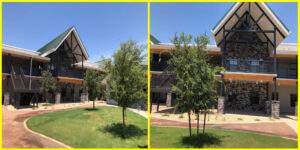
It’s Move-in Day at EVIT’s New On Campus Housing!
Youth who have reached 18 years of age and are transitioning out of foster care struggle to find permanent and affordable housing; studies have found that nearly 33% of these young adults experience homelessness*. In Arizona, the East Valley Institute of Technology (EVIT) is seeking to address this challenge through their new HopeTech residential community and program, which provides housing, academics, job training and other services to help young adults in successfully transitioning to adulthood.
On July 16, 2024, young adults 20 young adults moved into apartment style housing, attended orientation and began preparing for the fall semester ! As part of this program, these young adults will spend 35 hours per week on academics (including GED or high school completion if applicable), part-time employment, internships, mentoring, job training, independent living skill development), community meetings and other activities.
Would you like to help? Like many young adults, these youth need bedding, bath, kitchen, cleaning and other supplies. Check out EVIT’s Hope Tech program Amazon Gift Registry if you would like to support a young adult as they look forward to a future of hope!
*US Health & Human Services (HHS), Administration for Children & Families – January 2024
Strengthening Advocacy Through Education – Listen, Learn & Advocate: Training Highlights (and a New Podcast Episode!)

As summer temperatures rise and in-person training sessions become more challenging, VOICES remains dedicated to providing quality education for CASA volunteers in more accessible formats. This month, we launched our Back-to-School webinar series, covering essential topics such as technology safety, becoming an Educational Surrogate, and coping with anxiety in school settings.
In addition to our online training, we released a new podcast episode featuring Meghan Hays Davis from Prevent Child Abuse Arizona. In this episode, Meghan discusses the profound impact of trauma on young children and highlights the critical role relationships play in the healing process. She shares practical strategies for caregivers and CASA volunteers to support children in foster care, including how to recognize trauma responses and promote emotional regulation.
To delve deeper into this topic, you can listen to the full podcast episode.
(This was the Voices of Hope newsletter, August 2024. Subscribe to receive more.)
-
Voices of Hope – Be A Family
This month, we are celebrating families of all kinds in honor of both Family Reunification Month and Pride Month. We know that the essence of a family is not defined by its structure, but by the boundless love, support, and resilience it provides. Whether reunited after time apart or standing proud in their uniqueness, every family is a testament to the unbreakable bonds that sustain us. Join us as we honor the incredible impact that loving families, in all their forms, have on the lives of children.
In The Spotlight – Urgent Requests & Essential Needs
 VOICES works to provide temporary relief through referrals to non-profit partners. Arizona Friends of Foster Children Foundation offers funding for supplemental clothing.
Foster Alliance and Helen’s Hope Chest offer a shopping experience for the youth to select and try on clothes at their location.
If the timing is of an urgent nature, VOICES works to provide temporary relief through our Urgent Request and Essential Needs programs in addition to the referrals to non-profit partners.
A child in foster care requires a variety of different resources and a community of organizations surrounding these children to provide that care. So much of the need is for clothes.
Clothes are often “lost” or stolen when the youth are moved to a new placement. Some are wearing hand-me-down shoes four times too big or are pregnant and need maternity clothes. Warm jammies and soft slippers bring warmth and care to a youth in a new behavioral health facility.
My CASA Journey – From Ballet to LEGOs™!
Through their continual contact with a child, CASA volunteers are in a unique position to share in developing a child’s interest. For example, one CASA assisted her budding ballerina by applying for funding for ballet lessons, and then ballet shoes. Then, VOICES funded the performance fee so she could pirouette across the stage. Next, the CASA was able to take her to an Arizona Ballet amazing performance (courtesy of their Angel Nights program) sending her dreams soaring!
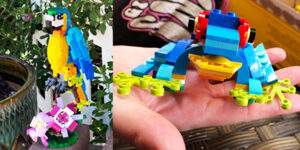
But it can also be very simple – trying things they have never done. A recent VOICES Lego Challenge found both the CASA volunteers and the teens attempting to build a Lego animal for the first time.
“We talked, we laughed, and we figured out the instructions together. She was so excited at the completed parrot and it was fun for me to see her exercise spatial skills. Her Foster Mom and Granny have two birds so she could not wait to show them our completed project! We decided that our parrot’s picture should be outdoors since that is where parrots naturally live. My kiddo took the attached pic using my phone.”
And another CASA:
“My CASA teen really enjoyed making this frog during our time together. During the build, there was not any discussion about appointments or the day-to-day life of being a teen in living in foster care. Rather, it was a child who simply got to be a “normal kid” (something she wishes for dearly). This was also a therapeutic, confidence boost as my teen (who had never worked with Legos prior) discovered that she has a genuine knack and skill at building a Lego creation.”
Positive Outcomes – Families Together Again! Celebrating National Family Reunification Month

The American Bar Association sponsors Family Reunification Month and Maricopa County has been celebrating Family Reunification Day since 2014 – 10 yrs of honoring families!
To celebrate the accomplishments of families who have overcome an array of circumstances to reunify safely and successfully.
To recognize the vital role that community partners – including mental health and substance abuse providers, courts and judges, foster parents, CASA volunteers and others – play in helping to reunify, strengthen, and support families.
To inspire other parents – particularly those going through the recovery process – that it is possible to confront and resolve the issues that led to their separation, and to reunify with their children.
Each year, partners across Maricopa County come together to rally for families who have reunified with their loved ones. Thousands of Arizona children are reunified with their families every year and the outpouring of love and joy our families have for each other inspires the entire community.
VOICES is an annual sponsor along with Casey Family Programs, Prevent Child Abuse – AZ, Family Involvement Center, among others. We are also joined by members of the Juvenile Court, the Department of Child Safety, attorneys and other child welfare service providers.
Maricopa County 10th Annual Family Reunification Celebration:
Saturday, June 15, 2024
1:00pm – 2:30pmJoin us in celebrating this courageous community of families!
To learn more and to register for the virtual event visit the Maricopa County Family Reunification Day Homepage.
In Focus – The Governor’s Office of Youth Faith and Family

Governor’s Office of Youth Faith and Family (GOYFF) has various commissions and advisory councils designed to focus on challenges facing our community. These include Human trafficking, substance abuse, a youth commission, among others.
VOICES had the opportunity to partner with CASA of Arizona to present at the Council for Child Safety and Family Empowerment.
This multidisciplinary council was created to align, leverage and coordinate faith-based and community resources to address challenges faced by vulnerable children and families who may be engaged with, or at risk of engaging with, the child welfare system.
Council members, who are appointed by the Governor, and public attendees had the opportunity to hear about becoming a Court Appointed Special Advocate. They also learned how VOICES supports the CASA volunteer experience and helps them make a difference in a child’s life.
Strengthening Advocacy Through Education – As We Celebrate Pride Month

As we celebrate Pride Month, we reflect on the rich history, ongoing struggles, and remarkable achievements of the LGBTQIA+ community. Amidst this celebration, it’s crucial to acknowledge the disparities and challenges faced by LGBTQIA+ youth, particularly those in foster care.
According to Youth.gov, LGBTQIA+ youth are disproportionately represented in the foster care system, with approximately 30% identifying as LGBTQIA+ compared to 11% in the general youth population. This overrepresentation is accompanied by unique challenges, including heightened rates of mental health issues, experiences of discrimination, and exposure to trauma. This underscores the need for targeted support and intervention for LGBTQIA+ youth to address the unique obstacles they encounter.
At VOICES, we are committed to providing ongoing educational opportunities for CASA volunteers, empowering them with the knowledge and skills necessary to effectively support LGBTQIA+ youth in foster care.
By equipping CASA volunteers with the tools to understand and address the specific needs of LGBTQIA+ youth, we strive to foster environments of acceptance, support, and inclusivity within the foster care system. Together, we can work towards a future where every LGBTQIA+ youth in foster care receives the care, understanding, and advocacy they deserve.
Learn more about this important topic.
(This was the Voices of Hope newsletter, June 2024. Subscribe to receive more.)