As the season of giving and gratitude begins, we’re reminded that even the smallest gestures can make a big impact. From moments of joy to opportunities for connection, every act of kindness helps create brighter days for children living in foster care.
May this season remind us that every child deserves the warmth of belonging, the comfort of safety, and the joy found in life’s simplest treats.
My CASA Journey – It’s a Treat!
For many, fall means selecting that perfect pumpkin to carve, decorating freshly baked cookies, or simply enjoying the cooler weather. VOICES helps CASA volunteers keep these exciting seasonal traditions alive for youth living in foster care by supplying tickets to visit local pumpkin farms, gift cards to purchase pumpkins, as well as cookies, decorating materials, and more!
These are exciting experiences you can feel by the surprised squeal when petting a goat or dipping fingers into frosting. Even the skeptical teens smile as one CASA noted:
“…we did have fun shopping for a pumpkin and haunted house cookie decorating kit at Fry’s! And we got black nail polish too!”
It’s the treat of a shared experience that lasts longer than the season.
In The Spotlight – Give Joy this Holiday Season
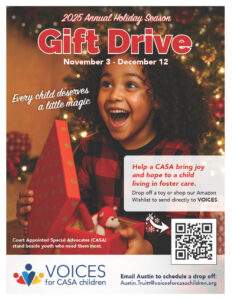 The holiday season is almost here, and Voices for CASA Children is excited to kick off our Annual Holiday Gift Drive to bring joy to children who are not home for the holiday. For many of these kids, the holidays can stir-up feelings of longing and separation, but a simple gift can remind them that they are seen, cared for, and not alone. Each gift makes a real difference.
Join us in making the holidays brighter and more joyful for these children in your community! Shop our Amazon Wishlist from November 3 to December 12.
If you’d like to drop off gifts in person, please contact austin.truitt@voicesforcasachildren.org to coordinate.
Positive Outcomes – Nina Mason Pulliam Legacy Scholars, Inspiring the Future!

VOICES proudly applauds the mission and impact the Nina Mason Pulliam Charitable Trust has made here in Maricopa County. Honoring the philanthropic heart of its founder, the Trust supports women, children and families in ways that enrich individuals and the community.
The Trust sought to make an even greater impact through support for individuals seeking higher education. In 2001, the Nina Mason Pulliam Legacy Scholars program was launched. The program is open to former foster youth, individuals living with disabilities, and adults with dependents, who are seeking their first degree through Arizona State University or Maricopa County Community College. If selected, individuals receive a full scholarship plus living expenses. Additionally, awardees are connected to a dedicated Nina Scholars team that provides mentorship and support for each individual student’s academic journey, turning barriers into a springboard for success!
Over 400 Nina Scholars have earned college degrees and 85% are working in their chosen field.
This life-changing opportunity opens December 1, 2025. Please help spread the word. Their future awaits!
In Focus – Give Back, Get Back.

We all believe that every child living in foster care deserves a strong advocate and a voice that’s heard. That’s why we need you by our side.
As an Arizona taxpayer, you have the power to help make a life-changing difference for a child at no additional cost to you. Through the Arizona Qualified Foster Care Tax Credit, every eligible dollar you give is returned to you on your state taxes.
Important note: You can contribute the full QFCO amount to Voices for CASA Children in addition to your QCO, school and other tax credit donations.
QFCO Thresholds:
$626 if single
$1,251 if married filing jointly
Don’t wait. Your gift today helps us ensure youth experience joy this season and have the support of a trained and dedicated CASA volunteer.
Tax Credit Benefits
VOICES is a Qualified Foster Care Organization. You can receive tax credit benefits for your donations in the 2025 tax filing year! QFCO #10010, #BeTheirVoice
Education – Behind the Mask
Many children learn to wear invisible masks. When early experiences include fear, neglect, or instability, showing emotion can feel risky. To stay safe, kids may hide what they feel. They may act calm, quiet, or even defiant on the surface while managing big emotions underneath.

Research shows that chronic stress can alter how the brain processes and regulates emotion. When the brain’s fear center (the amygdala) is frequently activated, the areas responsible for managing emotion (the prefrontal cortex) can become less effective. This makes it difficult for children to recognize, understand, and share their feelings in healthy ways. Emotional suppression isn’t defiance, it’s protection.
CASA volunteers play a vital role in helping children feel seen and safe. By showing up consistently, listening without judgment, and speaking up for their needs. Advocates offer the kind of stable, trusting relationship that teaches the brain it’s safe to express emotion and still be cared for. Over time, that steady presence helps the mask come off – revealing not resistance, but resilience.
Learn about Helping kids cope.
(This was the Voices of Hope, October 2025 newsletter. Subscribe to receive more.)

 The average time for youth living in foster care can vary, but for some youth it may be years. During that time, the foster or group home where the child lives can change due to a variety of factors. Finding stability is challenging, but finding a connection and kinship with someone can happen with a CASA Volunteer.




 SCHEELS has been in business for over 120 years and is in 16 states. While they are still fairly new to Arizona, VOICES has already felt the generosity they bring to the community through their employee-led Giving Campaign.
 Youth who turn 18 and have not been placed in a permanent home, either through family reunification, guardianship or adoption, face a big decision. They can exit into the world with potentially little support or they can choose to transition into the DCS Extended Foster Care program. CASA volunteers help guide these young adults to make the choice that is in their best interest. Even though the youth may be excited to be on their own, they may not have the transportation, financial means or life skills needed to stay safe, housed and in school.

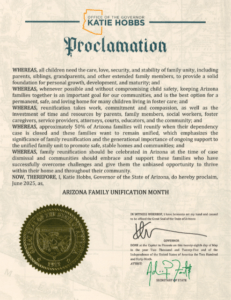 June is National Family Unification Month. This movement is sponsored by the American Bar Association and celebrates families who have been involved with the Department of Child Safety and achieved permanency through family reunification. The name change from ‘Reunification’ to ‘Unification’ reflects the full spectrum of the family journey from prevention to reunification to unification and long-term healing.





 You’ve talked about it with your husband or a close friend about becoming a CASA volunteer. The need is so great, but the role might look daunting?







 Hope can be a powerful catalyst for change for families navigating the child welfare system, yet it is often overlooked in conversations about advocacy and support. For CASA volunteers and those working with children and families, recognizing the role of hope in a parent’s journey can lead to deeper understanding, greater empathy, and more effective advocacy.








 This year’s celebration featured the finalization of 55 adoptions, ranging from toddlers to teenagers, and underscored the profound love and dedication adoptive families bring to the table.